Shared datacenter proxies continue to play an important role in 2026.
Not every proxy user needs full IP exclusivity. Many projects focus on cost efficiency, speed, and basic scalability. That is where shared datacenter proxies make sense.
They are fast, affordable, and easy to deploy. For testing, light scraping, browsing, and entry-level automation, shared data center proxies remain a practical choice.
This guide covers the top shared data center proxy providers in 2026.
Providers are ranked using performance-focused metrics, not brand hype.
What Are Shared Datacenter Proxies
Shared datacenter proxies are IP addresses hosted in datacenters and used by multiple users at the same time.
Instead of assigning one IP to a single customer, providers rotate or distribute traffic across a shared IP pool. This allows them to offer lower prices while maintaining high speed.
These proxies run on powerful servers, which keep latency low. However, because multiple users share the same IPs, reputation and stability can vary.
Shared datacenter proxies are best suited for:
- Testing environments
- Browsing and research
- Low to medium scraping
- Budget-conscious proxy users
They are not ideal for sensitive tasks like account management or high-risk automation.
Why Shared Datacenter Proxies Still Matter in 2026
Despite stricter bot detection, shared datacenter proxies still have a place.
The main reason is cost.
Residential proxies are expensive. Dedicated datacenter proxies cost more than shared ones. For users running short-term projects or experiments, shared proxies reduce overhead.
They also offer speed. Datacenter infrastructure ensures fast response times, even if IP reputation fluctuates.
Shared proxies are commonly used by:
- Beginners learning proxy setups
- Developers testing scripts
- Small teams running lightweight tools
In 2026, they remain a practical entry point into proxy usage.
Metrics Used to Rank Shared Datacenter Proxy Providers
Providers were ranked using the following criteria:
- Average response time
- Success rate on low protection sites
- IP pool size
- Rotation quality
- Uptime and infrastructure stability
- Pricing transparency
- Ease of setup
- Dashboard usability
- Customer support
Shared proxies were evaluated within their category, not compared against dedicated or residential proxies.
Shared Datacenter Proxy Comparison Table
| Provider | Avg Response Time (ms) | IP Pool Size | Rotation | Price per IP ($) |
| ProxyFish | 240 | Large | Automatic | 0.90 |
| Proxying | 265 | Large | Automatic | 0.85 |
| Bright Data | 230 | Very Large | Automatic | 2.00 |
| Smarkproxy | 295 | Medium | Automatic | 1.00 |
| Webshare | 310 | Small | Limited | 0.70 |
Best Shared Datacenter Proxy Providers in 2026 (Ranked)
ProxyFish
ProxyFish ranks first for shared datacenter proxies due to strong infrastructure and clean shared pools.
Features
ProxyFish offers fast shared datacenter proxies with controlled IP reuse.
The provider maintains strict limits on how many users share each IP, which helps reduce abuse.
HTTP, HTTPS, and SOCKS5 protocols are supported.
Pricing
- Starting price: $0.90 per IP
- Bulk plans available
Pros
- Fast response times
- Better IP cleanliness than most shared providers
- Simple dashboard
Cons
Shared IPs still carry some reputation risk.
Proxying
Proxying takes the second position with reliable shared proxy pools and flexible rotation.
Features
Proxying offers shared datacenter proxies designed for speed and stability.
Automatic rotation is available, making it suitable for scraping and testing.
Supports HTTP, HTTPS, and SOCKS5.
Pricing
- Starting price: $0.85 per IP
- Flexible plans
Pros
- Competitive pricing
- Stable performance
- Easy setup
Cons
Less control over session persistence
Bright Data
Bright Data ranks third with one of the largest shared datacenter proxy networks.

Features
Bright Data offers advanced rotation logic and wide geographic coverage.
The platform includes strong targeting options but requires technical knowledge.
Pricing
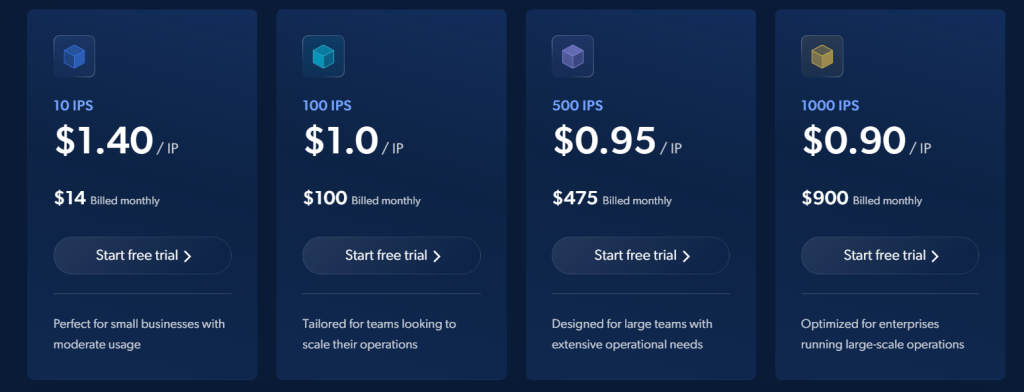
| Price Per IP | Total (+ VAT monthly) | Total number of IPs |
| $1.40 | $14 | 10 |
| $1.00 | $100 | 100 |
| $0.95 | $475 | 500 |
| $0.90 | $900 | 1000 |
Pros
- Large IP pool
- Advanced targeting
Cons
- Expensive for shared proxies
- Complex interface
Smartproxy
Smartproxy ranks fourth and is popular among small teams.
Features
Smartproxy provides shared datacenter proxies with solid uptime and reasonable speeds.
The platform is beginner-friendly.
Pricing
Starting price: $1.00 per IP
Pros
- Easy to use
- Decent global coverage
Cons
Higher block rates on protected sites
Webshare
Webshare ranks fifth and focuses on affordability.
Features
Webshare offers low-cost shared datacenter proxies through a simple self-service dashboard.
Often used for browsing, testing, and small scripts.
Pricing
Starting price: $0.70 per IP
Pros
- Very affordable
- No long-term commitments
Cons
- Smaller IP pools
- Limited targeting
How to Choose the Right Shared Datacenter Proxy
Shared datacenter proxies are not one size fits all.
Choose them if:
- You want low-cost proxies
- Your tasks are low risk
- You need speed over stealth
Avoid them if:
- You manage accounts
- You scrape highly protected sites
- IP reputation is critical
Focus on providers that limit IP reuse and maintain clean pools.
Conclusion
Shared datacenter proxies remain useful in 2026 for users who value affordability and speed.
They are ideal for testing, browsing, and light automation. While they carry more risk than dedicated proxies, the right provider can still deliver solid results.
ProxyFish leads the shared datacenter proxy market with better IP hygiene and performance. Proxying follows closely as a reliable and budget-friendly alternative.
Choose shared proxies for what they are. A fast, low-cost solution for non-critical tasks that still need scale.